Living Options
More Than Just Bingo: 12 Modern Independent Living Amenities You Will Love
- Living Options
The Evolution of Senior Living Spaces in 2026
A modern independent living amenities list starts with the essentials that make daily life easier and more enjoyable: restaurant-style dining and bistro cafes, dedicated fitness centers and movement studios, housekeeping and linen services, concierge transportation, and coordinated social programs. These hospitality-driven features define today’s senior living experience.
Senior living has undergone a fundamental transformation. In 2026, the traditional nursing home model has been replaced by a modern hospitality-driven experience. Older adults today are not seeking care facilities when they are fully capable of managing their own daily lives; they are seeking dynamic neighborhoods that cater to an active lifestyle, personal autonomy, and vibrant social connectivity.
When you look at the top features of 65 and over apartments, the focus is no longer just on basic accessibility. Today’s older adults want modern architecture, high-end interior finishes, walk-in closets, full-sized kitchens or kitchenettes, private balconies, and spaces designed to entertain friends and family. It is easy to see why 55+ active adult communities are the retirement hotspot: they blend independent home ownership perks with resort-style hospitality.
Redefining Retirement Beyond Stereotypes
For decades, popular media painted senior community life with a narrow brush: fluorescent-lit recreation rooms, rigid schedules, and endless rounds of bingo. While a lively game night still has its place, modern communities offer far richer daily experiences.
Today’s independent living experience emphasizes holistic wellness. We prioritize lifelong learning through guest university lectures, tech workshops, creative maker spaces, and curated culinary experiences. Modern community architecture incorporates airy, sunlit gathering spaces, outdoor dining terraces, and private wellness suites that feel like boutique hotels rather than residential facilities.
Maintenance-Free Autonomy
Perhaps the greatest luxury of independent living is the freedom of a maintenance-free routine. Homeownership requires endless upkeep: mowing the lawn, clearing snow, repairing roof leaks, replacing broken water heaters, and coordinating endless contractor visits.
In a dedicated independent living setting, all exterior and interior upkeep is managed seamlessly behind the scenes. Professional landscaping teams maintain lush grounds, on-site maintenance experts handle plumbing or appliance repairs within hours, and all major utilities are coordinated in one bundled package. This chore-free environment does not take away your independence—it protects your autonomy by giving you back your most valuable asset: time.
The Ultimate Independent Living Amenities List: 12 Modern Features You Will Love
When reviewing a community’s offerings, look closely at how the environment enriches your daily routine. According to this complete independent living guide, the goal of senior housing is to provide a comprehensive lifestyle safety net that preserves independence while fostering social engagement.
Here is our curated independent living amenities list featuring the 12 modern amenities you should look for.
1. Restaurant-Style Dining and Bistro Cafes
Gone are the days of institutional cafeterias serving rigid, bland menus at fixed meal times. Modern independent living offers restaurant-style dining with seasonal, chef-prepared menus that rival local eateries.
Residents enjoy flexible meal plans with diverse culinary options, including:
- All-day dining: Enjoy breakfast, lunch, or dinner on your own schedule.
- Casual bistros and coffee bars: Perfect for grabbing a morning espresso, fresh pastry, or light lunchtime sandwich with friends.
- Special dietary accommodations: Menus clearly label gluten-free, heart-healthy low-sodium, diabetic-friendly, and plant-based vegetarian options.
- Private dining rooms: Reserve dedicated spaces to host private birthday dinners, holiday gatherings, and family celebrations with full catering support.
2. Dedicated Fitness Centers and Movement Studios
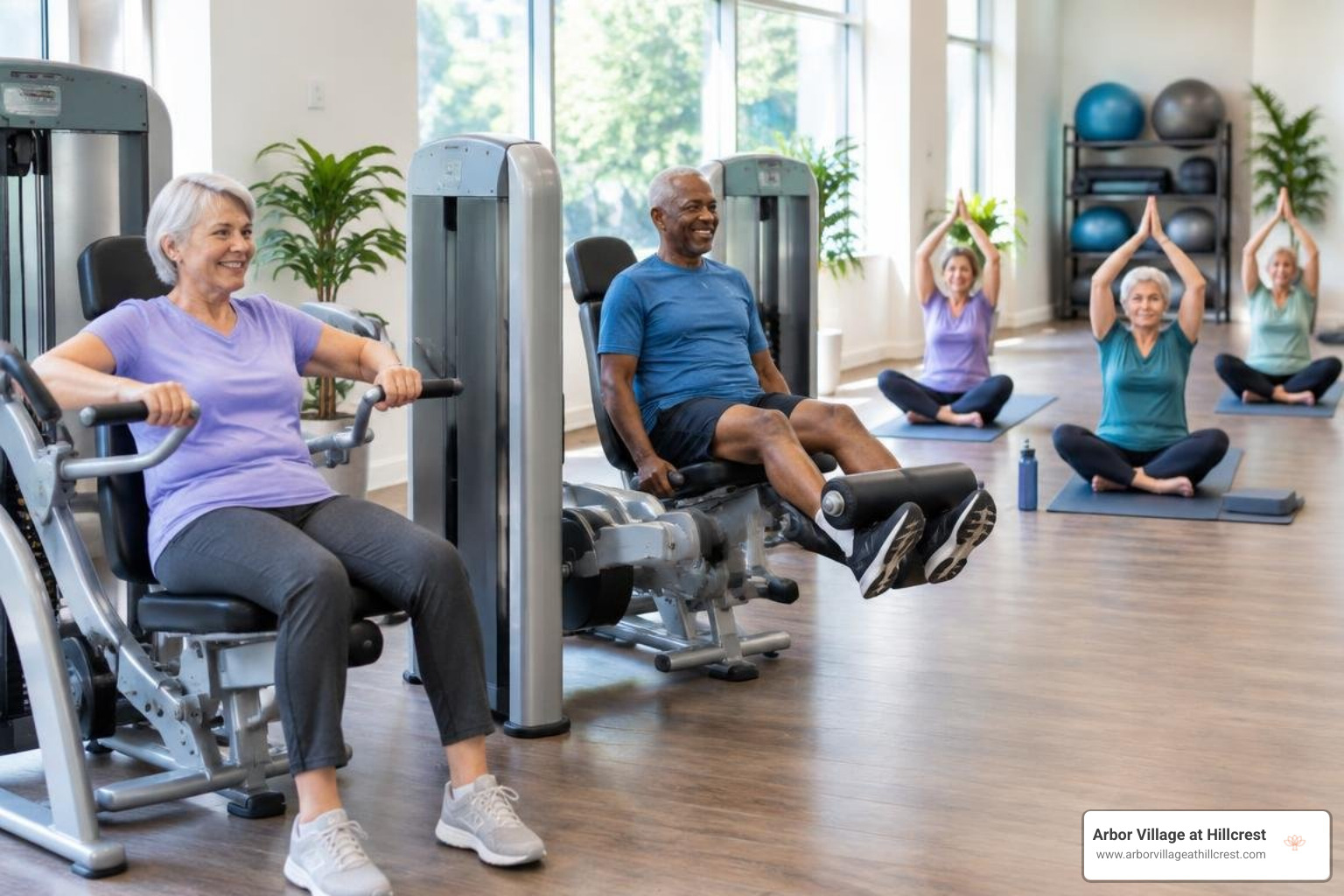
Staying active is the cornerstone of longevity and independence. Rather than setting up a couple of stationary bikes in a basement corner, top communities invest in dedicated fitness centers equipped with senior-specific strength training machinery (such as pneumatic resistance equipment that protects joints).
Movement studios offer instructor-led classes designed to support daily routines for active seniors. These include:
- Low-impact aerobics and cardio conditioning
- Gentle yoga, chair yoga, and mindful stretching
- Balance and fall-prevention training
- Guided resistance and strength-building circuits
3. Pet-Friendly Living and Dedicated Dog Runs
Retirement should never mean giving up your beloved four-legged companion. Research consistently links pet ownership with lower stress, increased daily physical activity, and reduced feelings of loneliness among seniors.
Modern communities welcome cats and dogs with thoughtful pet-centric amenities:
- Fenced, on-site bark parks and dog runs for off-leash exercise
- Dedicated pet-washing and grooming stations
- Landscaped walking paths equipped with waste stations
- Community pet parades, costume contests, and “yappy hours”
4. Scheduled Chauffeur and Concierge Transportation
Giving up the hassle of driving in heavy traffic or navigating winter road conditions should not mean losing your mobility. Independent living communities provide complimentary, scheduled group transportation and concierge transit options.
- Medical transit: Reliable, scheduled shuttles to nearby medical centers, physician appointments, and pharmacies.
- Shopping & errands: Regular group excursions to local grocery stores, shopping malls, banks, and post offices.
- Cultural outings: Group transport to downtown theater performances, botanical gardens, museums, and sporting events.
- Covered parking & garages: For residents who still maintain their own vehicles, covered carports or secure parking garages are readily available.
5. Full-Service Beauty Salons and Barbershops
Self-care and grooming are essential to feeling your best. Having a professional beauty salon and barbershop right down the hall eliminates the need to travel across town for standard personal care.
On-site salon and spa services typically include:
- Men’s and women’s hair styling, coloring, and cuts
- Professional blowouts and barber shaves
- Manicures and pedicures
- Therapeutic massage and aesthetician treatments
6. Creative Art Studios and Maker Spaces
Retirement offers the time to pursue passions you may have put on hold during your working years. Modern communities provide fully stocked creative studios and maker spaces designed to unlock your inner artist.
Explore creative senior living activity ideas such as:
- Ceramic and pottery workshops
- Watercolor, acrylic, and oil painting classes
- Fiber arts, knitting, and quilting circles
- Woodworking, model crafting, and DIY repair benches
7. Private Movie Theaters and Performance Lounges
Why settle for watching films on a small living room television when you can enjoy a full cinematic experience? Independent living communities feature custom screening rooms and private theaters.
These spaces boast plush cinema seating, acoustically treated walls, high-definition projection, and surround sound. They serve as multi-use entertainment hubs hosting:
- Nightly classic and newly released film screenings
- Live broadcasts of major sporting events
- Educational guest lectures and TED-style presentations
- Musical recitals and live acoustic performances by local artists
8. Landscaped Courtyards, Walking Paths, and Community Gardens
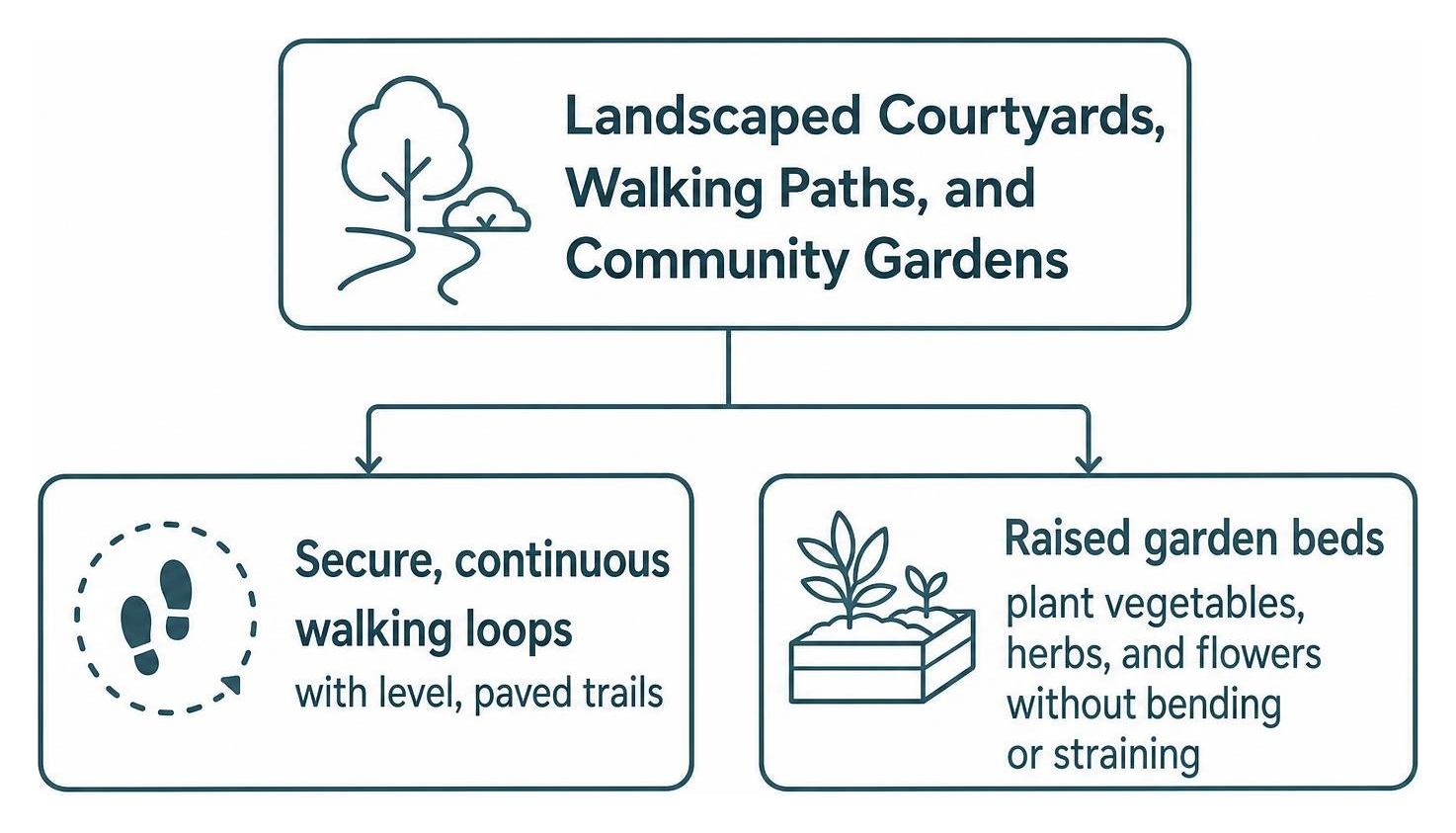
Direct access to nature and green space improves cognitive health, boosts mood, and provides an inviting outdoor setting for socializing.
Top-tier independent living grounds feature:
- Secure, continuous walking loops with level, paved trails
- Raised garden beds that allow residents to plant vegetables, herbs, and flowers without bending or straining
- Shaded outdoor patios, gazebos, and pergolas for reading
- Outdoor fire pits and barbecue pavilions for summer evening social hours
9. High-Tech Business Centers, Libraries, and Wi-Fi Lounges
Staying connected with family across the globe and managing personal affairs requires reliable technology. Independent living communities feature campus-wide high-speed Wi-Fi alongside dedicated business and learning hubs.
Key technology amenities include:
- Computer workstations with large-format displays and high-speed printers
- On-site libraries stocked with large-print books, daily periodicals, and audiobooks
- Quiet reading alcoves and fireside book club lounges
- Dedicated tech support clinics to help residents troubleshoot smartphones, tablets, and smart-home devices
10. Housekeeping and Linen Services
One of the most liberating amenities of independent living is delegating routine domestic chores to a trusted team. Regular housekeeping ensures a fresh, sanitized living space while freeing your energy for activities you love.
Learning how active senior care keeps adults thriving shows that removing physical household burdens helps seniors maintain functional independence much longer. Housekeeping packages typically feature:
- Bi-weekly or weekly thorough apartment cleaning
- Vacuuming, dusting, and hard-floor sanitization
- Flat-linen and towel laundering
- Daily or weekly trash collection and recycling services
11. Coordinated Social Calendars and Excursions
A robust social life is one of the best defenses against senior isolation. Rather than leaving social planning up to chance, community Life Enrichment Directors collaborate with residents to curate vibrant monthly activity calendars.
Community social life includes:
- Weekly happy hours with live music and appetizers
- Intergenerational programs with local schools and youth groups
- Resident-run special interest clubs (bridge, chess, astronomy, genealogy)
- Organized day trips to state parks, wineries, historical landmarks, and scenic drives
12. Essential Safety and Accessibility Features on an Independent Living Amenities List
While independent living focuses on lifestyle and hospitality, peace of mind requires a secure environment. Communities are designed with discreet safety systems that protect your autonomy. In Idaho, communities follow safety and structural standards aligned with the Idaho Department of Health and Welfare senior living guidelines to ensure resident well-being.
Essential accessibility and safety amenities include:
- 24-hour emergency response pull cords and wearable wireless alert pendants
- Zero-threshold, walk-in showers with integrated safety grab bars and slip-resistant flooring
- Wide, wheelchair-accessible doorways, hallways, and well-lit elevators
- Secure building access with keycard entry and 24/7 on-site staff presence
How to Evaluate and Budget for Modern Community Offerings
When planning a move, it is important to understand how monthly fees compare to the true cost of staying in a traditional single-family home. Many families initially experience sticker shock when looking at monthly community rates until they calculate the hidden expenses of homeownership.
| Expense Category | Traditional Homeownership (À La Carte) | Modern Independent Living (Bundled Value) |
|---|---|---|
| Housing & Upkeep | Mortgage/Rent, Property Taxes, HOA Fees, Home Repairs, Roof/HVAC Replacement | Included in single monthly rate |
| Utilities | Electric, Gas, Water, Sewer, Trash Removal, High-Speed Internet, Basic Cable | All standard utilities fully bundled |
| Dining & Groceries | Grocery shopping, meal prep, dining out expenses | Chef-prepared daily meals and flexible bistro plans |
| Domestic Chores | Housekeeping services, landscaping, snow removal | Professional bi-weekly housekeeping and complete groundskeeping included |
| Wellness & Leisure | Gym memberships, class fees, theater tickets, transport fuel/maintenance | On-site fitness center, classes, movie theater, and scheduled chauffeur transit included |
| Safety & Security | Home security subscription, emergency alert systems | 24/7 on-site staff, secure entry, and integrated emergency response |
Before moving into an active adult apartment, take time to review contract types. Reviewing smart senior living contract considerations ensures you understand lease lengths, deposit structures, and what services are bundled versus billed separately.
Comparing Value and Costs Using an Independent Living Amenities List
When comparing senior apartment living costs and amenities, use a side-by-side cost-benefit breakdown.
Look out for potential hidden fees such as:
- Second-person occupancy surcharges
- Pet deposits or recurring monthly pet rent
- Additional charges for reserved covered parking or storage lockers
- Premium meal plan upgrades and guest meal pricing
On-Site Tour Checklist for Prospective Residents
When touring prospective communities, do not simply admire the lobby decor. Use this hands-on evaluation checklist:
- Observe Resident Engagement: Are residents actively chatting in common spaces, walking dogs, or participating in fitness classes?
- Inspect Amenity Condition: Are the fitness machines modern and well-maintained? Is the library organized? Are outdoor paths clean and hazard-free?
- Sample the Dining: Request to have lunch during your tour. Is the food flavorful, fresh, and served at the right temperature? How attentive is the waitstaff?
- Evaluate Staff Interaction: Do team members greet residents by name as they walk through the corridors?
- Check Accessibility Details: Are hallway handrails secure? Are elevator doors timed appropriately for individuals using mobility aids?
Frequently Asked Questions About Independent Living Amenities
What amenities are typically included in standard monthly rent?
Standard independent living monthly rent typically bundles your private apartment, all major utilities (electricity, water, sewer, trash, and Wi-Fi), scheduled local transportation, weekly or bi-weekly housekeeping, full interior and exterior maintenance, access to all shared community amenities (gym, theater, salon, library), and a baseline dining plan.
How do independent living amenities differ from assisted living services?
Independent living focuses primarily on hospitality, convenience, and lifestyle enrichment for older adults who manage daily personal tasks without hands-on help. Assisted living provides all of these hospitality amenities plus individualized personal care services, such as assistance with bathing, dressing, grooming, mobility support, and medication management.
Can independent living communities accommodate special dietary needs?
Yes. Modern culinary teams work closely with residents to cater to a variety of nutritional and dietary requirements. Menus commonly provide diabetic-friendly, low-sodium, heart-healthy, gluten-free, and vegetarian selections at every meal, with chefs available for one-on-one dietary consultations.
Conclusion
Choosing a senior living community is not about downsizing your lifestyle—it is about upgrading your freedom, social connections, and peace of mind. By prioritizing an enriching independent living amenities list, you can find a vibrant home base that eliminates daily chores and gives you more time to enjoy your retirement.
At Arbor Village at Hillcrest, we are proud to offer a beautifully renovated, pet-friendly independent living community in Boise, Idaho. With chef-prepared dining, robust daily activity schedules, dedicated wellness spaces, and an attentive team that treats you like family, we invite you to experience how rewarding maintenance-free senior living can be. Schedule a tour with us today to see our modern amenities in person!
Related Posts
- A Clear Guide to Senior Assisted Living Housing Options

Compare adult assisted living apartments to other senior housing, explore costs, eligibility, and amenities, and find the right community for your loved one.
- Moving to Senior Living with Your Pet Made Simple

Find nursing homes that allow pets. Explore policies, costs, and expert tips to transition into senior living with your pet.
- Finding the Perfect 55+ Rental Community Without the Headaches

Find apartments for active seniors near me with this guide to 55+ rentals, costs, amenities, and tours for a maintenance-free lifestyle.
Recent Posts
 Stretch Your Retirement Budget With Subsidized Senior Apartments
Finding Apartments for Seniors on a Fixed Income
To find apartments for seniors on a fixed income in Boise, start with your local public housing authority and ask about open waiting lists. Also contact Section 202 senior properties and income-restricted apartment communities directly. Apply to more than one list: vouchers, subsidized buildings, and tax-credit apartments can have different openings and rent rules.
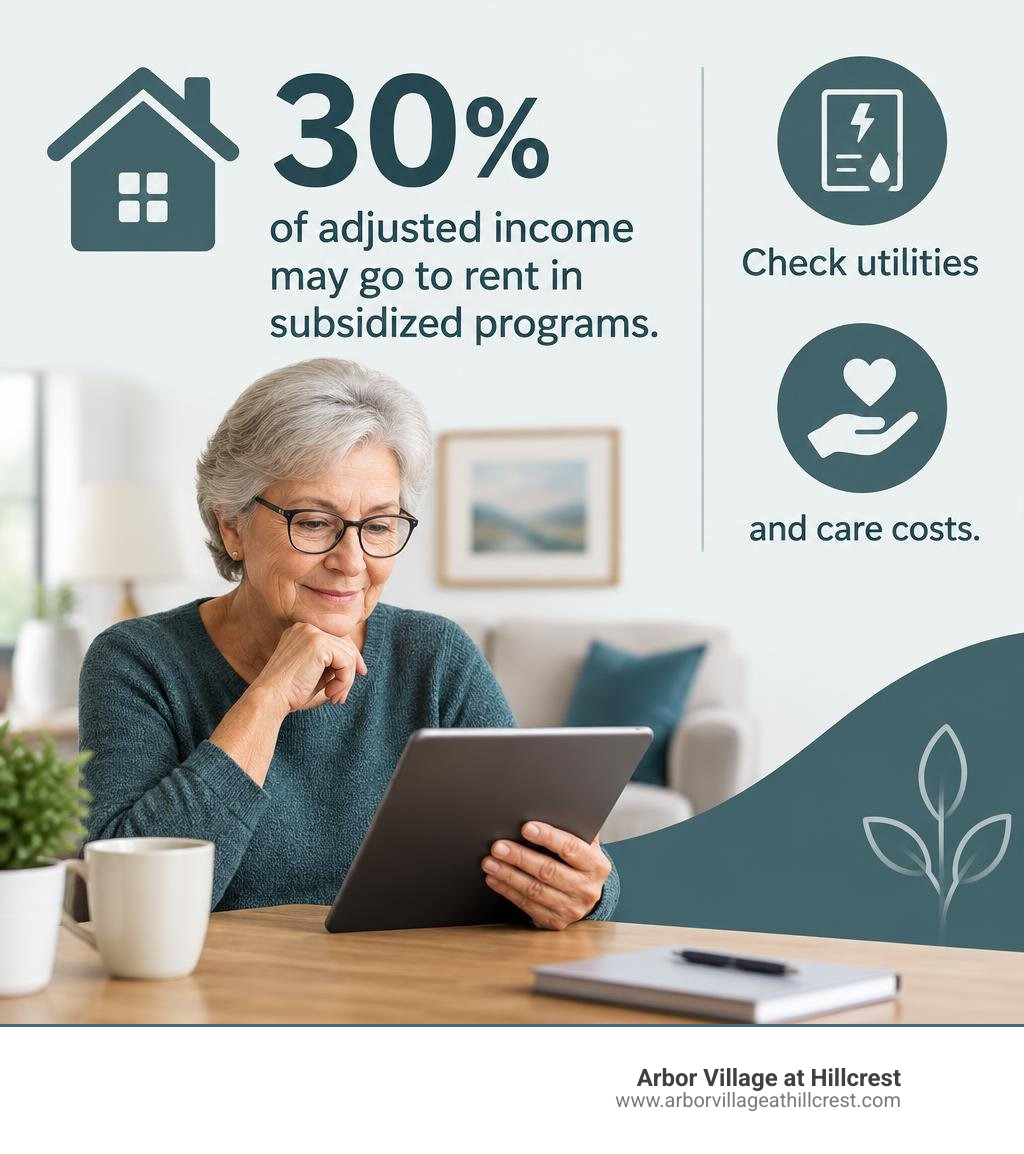
As a starting point for your budget, many subsidized programs set rent at about 30% of adjusted monthly income. Ask each property what you would actually pay, including utilities. If your parent needs help with daily tasks, check what support is available separately; an affordable apartment does not necessarily include personal care.
I’m Phillip King, and I’ve spent decades working across senior living operations, including independent and assisted living. I’ll use that experience to help you weigh apartments for seniors on a fixed income against your parent’s budget and support needs.

Apartments for seniors on a fixed income helpful reading:
Planning for retirement living in November 2026 can feel daunting when you look at current economic data. Today, roughly 9.9% of adults age 65 and older live in poverty across the United States, and under the Supplemental Poverty Measure, that figure climbs toward 15%. Over 17 million older Americans are economically insecure, living at or below 200% of the federal poverty guideline ($31,920 annually for an individual).
Housing remains the single largest expense for retirees. More than 58% of senior renters and 34% of senior homeowners spend 30% or more of their monthly income strictly on housing costs, making them officially cost-burdened. When the average monthly Social Security retirement benefit sits around $2,071 and Supplemental Security Income (SSI) averages approximately $736 to $994 per month, private market rent can quickly consume every penny. With the population over 65 expected to reach 73 million by 2030, learning how to unlock affordable housing programs is essential to protecting your long-term comfort and security.
Understanding Affordable Housing Options for Low-Income Retirees
Finding safe, comfortable housing that aligns with a modest monthly check does not mean settling for subpar conditions. A variety of federal and state-supported housing initiatives exist specifically to lower the cost of living for retirees. Exploring affordable senior living communities made simple for budget-conscious retirees helps you identify which program matches your income tier and lifestyle expectations.
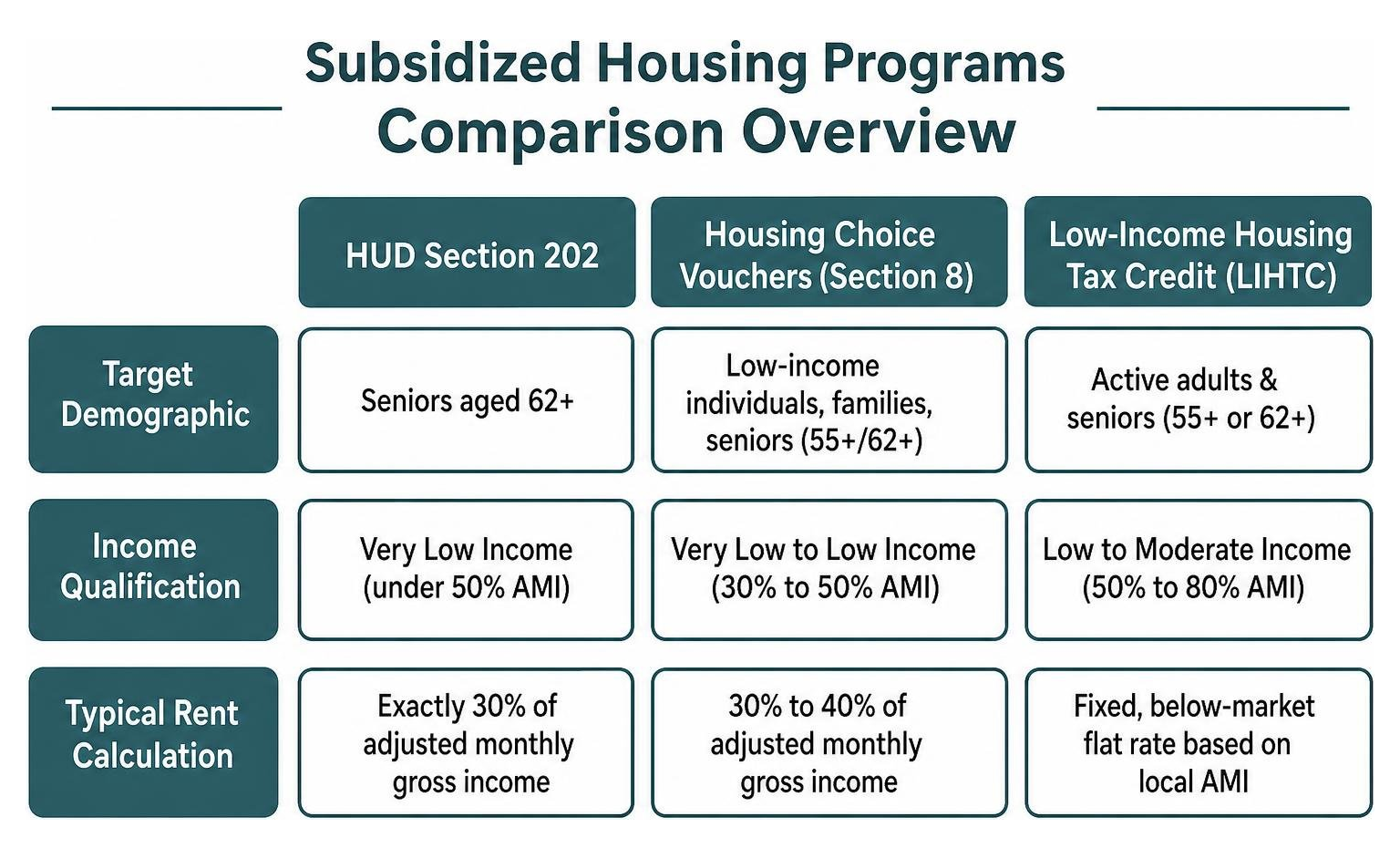
Program Name Target Demographic Income Qualification Typical Rent Calculation HUD Section 202 Seniors aged 62+ Very Low Income (under 50% AMI) Exactly 30% of adjusted monthly gross income Housing Choice Vouchers (Section 8) Low-income individuals, families, seniors (55+/62+) Very Low to Low Income (30% to 50% AMI) 30% to 40% of adjusted monthly gross income Low-Income Housing Tax Credit (LIHTC) Active adults & seniors (55+ or 62+) Low to Moderate Income (50% to 80% AMI) Fixed, below-market flat rate based on local AMI Public Housing Developments Low-income seniors and families Low Income (under 80% AMI) 30% of adjusted monthly gross income HUD Section 202 and Housing Choice Vouchers
The primary federal cornerstone for senior housing is the Section 202 Supportive Housing for the Elderly program managed by the U.S. Department of Housing and Urban Development. Section 202 properties are designed specifically for adults aged 62 and older who meet very low-income guidelines (typically earning 50% or less of the Area Median Income).
Under Section 202, tenants contribute 30% of their adjusted monthly gross income toward rent, and HUD provides direct rental subsidies to the building operators to cover the remaining balance. When calculating countable income, HUD allows specific deductions for seniors. In 2026, this includes an automatic $550 mandatory elderly household deduction, as well as allowances for qualifying out-of-pocket medical and prescription expenses that exceed 3% of your annual income. Official Information for Senior Citizens outlines how these capital advance programs also help fund on-site service coordinators who assist residents with accessing community resources and daily meal programs.
Meanwhile, Section 8 Housing Choice Vouchers operate in two distinct forms:
- Tenant-Based Vouchers: The voucher belongs to you. You can take it to any private rental property that accepts Section 8 vouchers, provided the unit meets HUD health and safety quality standards and falls within the local Fair Market Rent payment standard.
- Project-Based Vouchers (PBVs): The subsidy stays attached to a specific apartment unit in a partner-owned property. If you move in, you enjoy the subsidized rent (paying 30% of your income), but if you decide to move out, the voucher remains with the unit for the next qualifying applicant.
Low-Income Housing Tax Credit (LIHTC) and Senior Communities
The Low-Income Housing Tax Credit (LIHTC) program is another widespread model for affordable housing. Unlike Section 202 or Section 8, LIHTC developments are built and managed by private developers and management companies who receive federal tax credits in exchange for setting aside units at capped, below-market rental rates.
LIHTC properties do not calculate your rent as a direct 30% percentage of your individual monthly check. Instead, they charge a fixed, predictable rent pegged to set Area Median Income (AMI) tiers—most commonly 50%, 60%, or 80% AMI. For instance, in an area where 60% AMI allows a flat rent of $800 per month for a one-bedroom apartment, any applicant qualifying under that income ceiling pays that flat $800, regardless of whether their personal income is $1,200 or $2,400 monthly.
If you are looking to downsize and enjoy peer companionship, you can find your next home in a thriving 55 senior apartment community developed under LIHTC guidelines. Under the Fair Housing Act, communities designated as 55+ must ensure that at least 80% of occupied units include at least one person aged 55 or older, while communities restricted to 62+ must ensure that 100% of residents meet that age threshold.
Key Government Programs and Apartments for Seniors on a Fixed Income
When putting together your monthly budget, it is important to map out all public benefits and recurring revenue streams. For the vast majority of older adults, Social Security forms the financial base. With the average 2026 Social Security retirement check at $2,071, budgeting for market-rate independent living or private apartments can be tight. Those relying on Supplemental Security Income (SSI) face even stricter limits, receiving approximately $736 to $994 per month.
A common question many retirees ask is whether health insurance covers apartment rental fees. Medicare does not pay for room and board, apartment rent, or custodial long-term care. Medicare only covers medically necessary clinical healthcare, such as doctor visits, physical therapy, and hospital stays.
Medicaid, on the other hand, can help pay for personal care and daily living assistance through Home and Community-Based Services (HCBS) waivers for those who meet strict financial thresholds (generally an income under $2,982 per month and liquid assets under $2,000 for an individual). While Medicaid waivers may cover personal care services like medication management and bathing support, they typically do not pay standard room and board rental costs in independent senior apartments.
Qualifying for Subsidized Apartments for Seniors on a Fixed Income
To successfully qualify for subsidized housing, applicants must meet specific criteria determined by federal and regional housing authorities:
- Age Requirements: Most senior-specific developments require at least one household member to be 62 or older (as with Section 202), while active adult communities often set the minimum age at 55.
- Income Limits: Program income thresholds are benchmarked annually against local Area Median Income (AMI). Very low-income limits are capped at 50% AMI, while low-income limits range between 50% and 80% AMI. The 2026 federal poverty guideline stands at $15,960 annually ($1,330/month) for an individual and $21,640 ($1,803/month) for a two-person household.
- Asset Thresholds and Exclusions: Subsidized programs review countable assets (such as checking and savings balances, stocks, and bonds), but exclude essential personal possessions, one primary personal vehicle, and certain non-liquid personal property.
- Citizenship and Screening: Applicants must have eligible U.S. citizenship or qualifying legal immigration status, pass criminal background screening, and have a clear rental history free of outstanding debts owed to public housing authorities.
Reviewing a detailed guide on how to qualify and apply for affordable elderly apartments will help you calculate your exact adjusted income before completing formal applications.
How to Apply for Apartments for Seniors on a Fixed Income
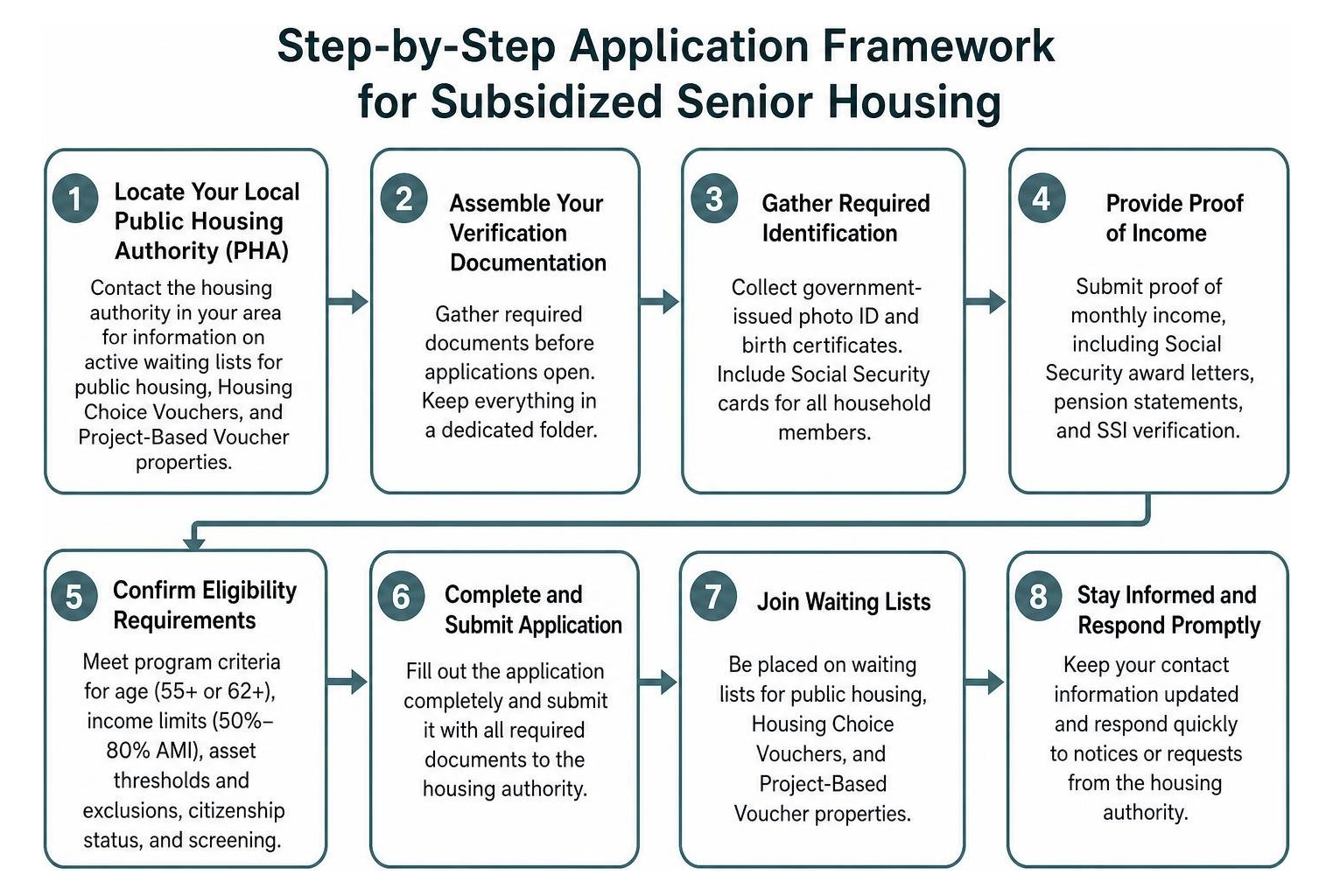
Applying for affordable senior housing requires organization and a clear strategy. Because demand is high across the country, following a structured process helps ensure you do not encounter avoidable delays:
- Locate Your Local Public Housing Authority (PHA): Contact the housing authority serving Boise or your local area to request information on active waiting lists for public housing, Housing Choice Vouchers, and Project-Based Voucher properties.
- Assemble Your Verification Documentation: Before applications open, gather your essential paperwork in a dedicated folder. Housing authorities require:
- Government-issued photo identification and birth certificates.
- Social Security cards for all household members.
- Proof of monthly income, including Social Security award letters, pension statements, and SSI verification.
- Recent bank statements covering the past 3 to 6 months.
- Proof of recurring out-of-pocket medical expenses (prescription receipts, supplemental insurance premiums).
- Prior landlord contact details for rental history verifications.
- Execute a Multi-Waitlist Strategy: Never apply to just one complex. Apply to multiple property waiting lists across different non-profit developments, Section 202 properties, and municipal housing developments simultaneously.
- Identify Special Preferences: When submitting forms, indicate whether you qualify for local waiting list preferences, such as veteran status, living in substandard housing, paying more than 50% of your income toward rent, or involuntary displacement.
Educational resources like Housing for Seniors Based on Income: Affordable & Subsidized Options provide further clarity on how to navigate regional housing agencies.
Managing Waiting Lists and Navigating Affordable Housing Alternatives
One of the biggest hurdles low-income seniors face is navigating waiting lists. Subsidized senior apartment waitlists commonly range from 6 months to over 3 years depending on local inventory and vacancy rates.
To manage this waiting period effectively:
- Keep Contact Details Updated: Housing authorities regularly audit their lists by sending letters. If you change your phone number or mailing address and do not notify the agency, your name could be removed from the waiting list.
- Respond Immediately to Correspondence: When your name nears the top of the list, agencies will issue a short response deadline (often 10 to 14 business days). Keep your organized documentation ready so you can submit updated verifications without delay.
- Explore Bridge Alternatives: If you are waiting on a multi-year list, consider short-term alternatives such as home-sharing networks, moving in with family temporarily, or budgeting for finding your ideal 1 bedroom senior apartment for rent made simple within private, modest rental communities.
What to Look for When Touring Subsidized Senior Communities
When you receive a tour invitation or prepare to select an affordable apartment, look beyond basic curb appeal to evaluate daily safety, accessibility, and ongoing costs.
- Physical Accessibility: Look for step-free zero-threshold entries, wide doorways capable of accommodating walkers or wheelchairs, elevators in multi-story buildings, and secure grab bars in bathrooms.
- Safety and Security Features: Check for functional smoke and carbon monoxide detectors, well-illuminated hallways and parking areas, secured building access systems, and pull-cord emergency response stations in bedrooms and bathrooms.
- Utility Costs and Inclusions: Always ask property management whether base rent covers utilities. In many HUD Section 202 and public housing properties, heat, water, and trash collection are included. If utilities are billed separately, confirm if the community offers a utility allowance deduction to offset your monthly out-of-pocket costs.
- Community Policies and Culture: Ask for written policies regarding pets, visitor rules, and smoking. Federally funded public housing developments strictly prohibit lit tobacco inside units and within a 25-foot perimeter of all buildings, while Section 202 and LIHTC properties establish property-specific smoking and vaping guidelines.
For a comprehensive checklist of questions to ask during a visit, consult the ultimate guide to comparing senior apartment living costs amenities before signing your lease agreement.
Frequently Asked Questions About Affordable Senior Living
Will Medicare or Medicaid cover rent in a senior apartment?
No. Traditional Medicare and Medicare Advantage plans do not pay for monthly room and board, rent, or utilities in senior apartments. Medicare is strictly medical health insurance that funds clinical treatments, outpatient doctor care, hospital stays, and short-term rehabilitative skilled nursing care.
Medicaid cannot pay standard apartment rent either, but qualifying low-income individuals may utilize Medicaid Home and Community-Based Services (HCBS) waivers to receive in-home personal care, such as assistance with dressing, bathing, and meal prep inside their private apartment.
What percentage of monthly income goes toward rent in subsidized senior housing?
In standard HUD-subsidized housing programs—including Section 202 Supportive Housing for the Elderly, public housing, and Housing Choice Vouchers—tenants typically pay 30% of their adjusted monthly gross income toward rent. Your adjusted income is determined by taking your total gross income and subtracting eligible deductions, such as the standard elderly household deduction and allowable unreimbursed out-of-pocket medical expenses.
In Low-Income Housing Tax Credit (LIHTC) properties, rent is not calculated as a 30% percentage of your income, but is instead set at a flat, below-market monthly rate determined by regional Area Median Income brackets.
How long are waiting lists for low-income senior apartments?
Waiting times vary widely based on location and program type, typically ranging anywhere from 6 months to 3 years or longer. In high-demand metropolitan markets, voucher programs may temporarily close their waitlists entirely once application quotas are reached. You can improve your placement timeline by applying to multiple open property-based waitlists simultaneously and keeping your contact information up to date with every housing office.
Conclusion
Stretching your retirement budget requires understanding the housing subsidies and assistance programs available to you. By taking advantage of HUD Section 202 developments, Housing Choice Vouchers, and income-restricted communities, seniors on fixed retirement incomes can secure stable, comfortable living arrangements without sacrificing their financial peace of mind.
While subsidized independent apartments provide a reliable solution for independent seniors, care needs can evolve over time. If you or your loved one in Boise, Idaho reaches a point where daily tasks—like cooking, medication reminders, or personal care—become challenging, we are here to support you. At Arbor Village at Hillcrest, we provide a warm, renovated, and pet-friendly community offering independent living, assisted living, and respite care. Our dedicated, attentive team is focused on delivering engaging activities, exceptional on-site amenities, and personalized support that fits your lifestyle.
To see how our supportive setting can provide comfort, connection, and peace of mind for your family, explore our vibrant senior living community and schedule a personalized tour with our team today.
 Ultimate Checklist for Assisted Living Activities & Options
Assisted Living Activities: What to Look For
Look for a mix of movement, creative projects, learning, social time, and outings. A strong activity calendar offers choices each day, including seated options for residents with limited mobility. Ask your parent what they enjoy, then check whether the community’s schedule reflects those interests. Activities should be easy to join, safe for different abilities, and enjoyable without pressure to participate.
I’m Phillip King. My decades of work in senior living operations have taught me to look beyond a long calendar and ask whether assisted living activities fit the people who live there. A truly engaging community does more than fill time slots. It builds daily rhythms that support physical health, mental sharpness, and emotional connection. When you tour a community, notice whether staff members invite residents into conversations, whether the calendar includes both familiar favorites and fresh experiences, and whether residents appear relaxed and involved rather than simply present.
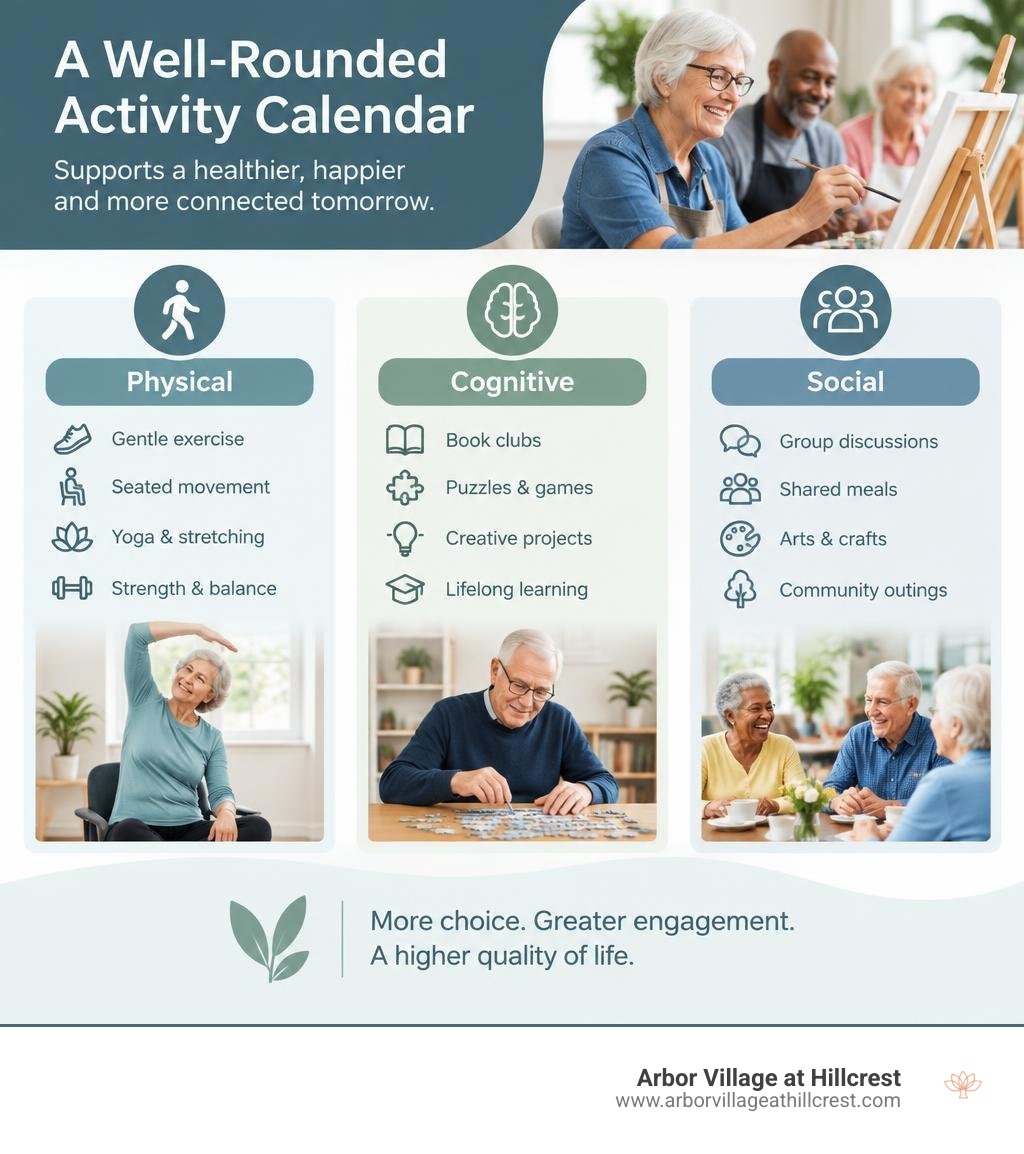
A useful way to evaluate a program is to think across three dimensions: physical, cognitive, and social. Physical activities should include options for standing and seated participants, with staff nearby to support balance and mobility. Cognitive activities should range from light conversation and music to trivia, puzzles, and book discussions. Social activities should create natural opportunities for residents to talk, laugh, and build friendships without feeling forced. The best calendars weave these dimensions together so a resident might stretch in the morning, paint in the afternoon, and enjoy live music with neighbors after dinner.
Core Health and Wellness Benefits of Assisted Living Activities
Engaging daily recreation is not just a way to pass the afternoon; it is a foundational pillar of modern senior wellness. According to the National Institute on Aging (NIA), older adults who engage in mentally and physically stimulating activities can help fend off serious health challenges, including dementia, diabetes, and heart disease. Regular participation supports cardiovascular health, reduces fall risk, and helps residents maintain the strength and stamina needed for everyday tasks such as dressing, bathing, and moving safely through their homes.
When considering senior care options—where the median cost of assisted living across the country is approximately $5,419 per month—the richness of life within the community matters immensely. A thoughtfully designed lifestyle program demonstrates how active senior care keeps aging adults thriving and independent. Families should view the activity calendar as part of the care plan, not as an optional extra. The right mix of movement, mental challenge, and social contact can improve sleep, lift mood, and help residents feel more like themselves.
Physical Vitality and Mobility Maintenance
Physical movement helps preserve independence. Regular exercise decreases depression, reduces fall risks, lowers blood pressure, and improves overall strength, balance, and sleep quality. It also supports joint flexibility and circulation, which are essential for older adults who want to remain active in their daily routines.
Our movement sessions focus on joint flexibility, circulation, and functional strength. Whether participating in chair yoga or light resistance training, residents maintain the mobility necessary to navigate daily life with confidence and ease. Even modest, consistent movement can make a meaningful difference in how residents feel when they get up in the morning, walk to the dining room, or reach for an item on a shelf.
Cognitive Stimulation and Memory Support
The brain thrives on novelty and challenge. Group trivia, complex puzzles, strategy games, and reminiscence therapy encourage neuroplasticity and memory retention. Keeping cognitive pathways active through conversational games and problem-solving gives residents an intellectual spark that brightens their everyday routines. Activities that ask residents to recall a favorite song, solve a word puzzle, or share a story from their past help keep memory and language skills engaged in a low-pressure, enjoyable way.
Combating Isolation Through Meaningful Connection
Social isolation and prolonged loneliness among seniors significantly increase the risks of heart disease, obesity, elevated blood pressure, and cognitive decline. Group activities provide natural opportunities to forge new friendships. Sharing laughter over a board game or swapping stories during morning coffee builds peer bonding and creates a strong sense of belonging. Over time, these small interactions become the emotional foundation of community life, helping residents feel known, valued, and connected to the people around them.
The Comprehensive Categories of Engaging Senior Activities
A thriving activity program balances routine with variety, ensuring there is something exciting for every personality and energy level. The most successful communities treat the calendar as a living document that evolves with resident interests, seasonal changes, and new ideas from staff and families.
Creative Expression and Lifelong Learning
Creativity does not retire. Many seniors love painting, pottery, creative writing, card making, and book clubs. Engaging in artistic hobbies acts as a meditative outlet while building fine motor skills. Exploring fun group activities for assisted living helps residents unlock new artistic talents or pick up beloved hobbies they have not practiced in years. Creative projects also give residents a tangible sense of accomplishment. A finished watercolor, a handwritten poem, or a handmade greeting card can spark pride and become a meaningful gift for a family member or friend.
Adaptive Fitness, Movement, and Mindfulness
Daily movement classes like gentle stretching, walking clubs, tai chi, and guided breathwork help ground the mind and invigorate the body. Modern wellness extends far beyond old-school routines, taking full advantage of modern independent living amenities such as dedicated wellness studios, scenic courtyards, and accessible fitness centers. Mindfulness practices, including guided meditation and slow breathing, can reduce anxiety and help residents feel calmer throughout the day.
Scenic Community Outings and Nature Exploration
Research consistently shows that spending time in natural settings lowers stress and elevates overall mood. Regular local excursions offer refreshing changes of scenery. We love organizing scenic Boise senior outings to local botanical gardens, riverside parks, and cultural museums, bringing nature therapy and community connection right to our residents’ front door. Outings also give residents a chance to share experiences with neighbors outside the usual setting, which can deepen friendships and create lasting memories.
Festive Celebrations and Intergenerational Events
Special events bring vibrant energy into the neighborhood. Live musical performances, themed seasonal dinners, local school choir visits, and pet therapy bring joy across generations. Organizing lively holiday celebrations keeps cherished traditions alive while creating wonderful new memories for residents, friends, and visiting families alike. Intergenerational events are especially powerful because they connect residents with younger generations, offering fresh perspectives and the warmth of shared celebration.
How to Tailor Programs for Diverse Physical and Cognitive Abilities
No two residents have the exact same interests, health profiles, or endurance levels. An exceptional recreation team adapts every session so everyone can join in without frustration or fatigue. The goal is to create an environment where participation feels welcoming rather than competitive, and where each resident can engage at a level that feels comfortable and meaningful.
Mobility & Cognitive Level Recommended Physical Programs Recommended Cognitive & Creative Options Key Adaptations & Support High Mobility / Mild Support Walking clubs, standing yoga, lawn games Book clubs, advanced trivia, canvas painting Self-paced pacing, hydration stops Limited Mobility / Seated Chair aerobics, seated balloon volleyball Floral arranging, water coloring, card games Adaptive grips, zero-step access Sensory / Memory Care Focus Gentle rhythmic swaying, hand massage Aromatherapy, tactile puzzles, music sing-alongs Clear verbal cues, low-distraction spaces Structuring Inclusive Assisted Living Activities for Limited Mobility
Physical limitations should never prevent someone from participating in community life. Adaptive gardening using raised planters, seated balloon volleyball, wheelchair-accessible trivia circles, and tactile arts ensure everyone stays involved. Care teams follow established state guidelines on adult care activities and nutrition to ensure activities are paired with proper physical support, adaptive equipment, and comfortable seating. Staff members are trained to offer assistance without hovering, so residents can remain as independent as possible while still receiving the help they need.
Cognitive and Sensory-Focused Engagement
For residents managing memory loss or advanced cognitive changes, structured sensory activities are deeply comforting. Music therapy, rhythmic sing-alongs, aromatherapy, and tactile fabric stations spark positive memories and reduce afternoon restlessness without causing cognitive overwhelm. These activities rely on familiar, soothing inputs rather than complex instructions, which helps residents feel safe and engaged even when verbal communication becomes more difficult.
Designing, Scheduling, and Managing a Well-Balanced Routine
Data shows that across communities utilizing structured digital engagement platforms, a median of 79.6% of residents participate actively every month when calendars are clear, diverse, and well-promoted. That level of participation does not happen by accident. It requires thoughtful planning, consistent communication, and a willingness to adjust based on what residents actually enjoy.
Designing a Dynamic Monthly Calendar of Assisted Living Activities
A balanced calendar blends predictable daily favorites with fresh novelty events. By mastering the assisted living activity calendar, teams ensure mornings feature gentle physical exercise, afternoons offer creative or intellectual workshops, and evenings wind down with social gatherings. It is also vital to plan plenty of engaging weekend activity ideas so the weekend stays just as lively as the workweek. Seasonal themes and novelty events keep the calendar from feeling stale, while familiar favorites give residents a comforting sense of rhythm.
Here are several creative, low-cost activity ideas that enrich daily schedules:
- Culinary Demonstrations: Resident-guided recipe sharing featuring simple, no-bake heritage treats.
- Sip and Paint Socials: Non-alcoholic sparkling ciders paired with guided watercolor landscape painting.
- Armchair Travel Clubs: Themed afternoons exploring world destinations via travel documentaries, cultural music, and regional snacks.
- Story Circles & Oral History: Recorded storytelling hours where seniors share life advice and classic memories with peers.
- Gardening & Floral Arranging: Arranging seasonal blooms into centerpieces for community dining tables.
- Music and Memory Hours: Listening to favorite songs from different decades and sharing the stories those songs bring to mind.
- Gentle Morning Wake-Up Stretch: A short, seated routine that helps residents start the day with better circulation and a clearer mind.
Gathering Resident Feedback and Incorporating Personal Preferences
A vibrant calendar is built with residents, not just for them. Monthly resident council meetings, suggestion boxes, and one-on-one welcome surveys ensure the calendar evolves to reflect the community’s real passions. Staff should also observe which activities draw the most enthusiastic participation and which ones consistently fall flat, then use those observations to refine the schedule. When residents see their ideas appear on the calendar, they feel a stronger sense of ownership and are more likely to invite friends and neighbors to join.
Safety Protocols, Accessibility, and Family Involvement
A successful recreation program prioritizes resident health and security while encouraging active family participation. Safety and enjoyment are not competing goals; the best activities are designed so residents can relax and have fun because the environment has already addressed potential risks.
Essential Safety Standards and Health Precautions
Safety must be woven seamlessly into every gathering. Activity areas should feature non-slip flooring, wide clearance for mobility devices, comfortable climate control, and easy access to hydration stations. Staff are trained in fall prevention, emergency response, and adaptive ergonomics while upholding certified assisted living standards in Idaho. Before each activity, team members check that chairs are stable, walkways are clear, and any equipment is in good condition. During outings, staff maintain appropriate supervision ratios and carry emergency contact information for every resident.
Engaging Families and Staff in Meaningful Programming
We believe community life is brightest when loved ones join in. Families are always welcome to participate in weekend brunches, holiday banquets, summer courtyard barbecues, or volunteer to lead a club based on their own unique talents. Family members who share a skill—whether it is playing an instrument, teaching a craft, or leading a book discussion—add variety to the calendar and create special moments with their loved ones. Staff members also play a key role by learning residents’ preferences, offering gentle encouragement, and celebrating small victories alongside the people they serve.
Frequently Asked Questions About Assisted Living Activities
What are the most popular activities in assisted living communities?
Fitness classes like chair yoga, live musical entertainment, trivia nights, holiday parties, and local shopping or scenic outings are consistently among the most popular offerings. Residents also enjoy creative workshops such as painting and floral arranging, as well as social games that encourage conversation and laughter.
How do communities accommodate seniors with varying mobility or cognitive levels?
Programs use adaptive tools (such as large-print cards, non-slip mats, and easy-grip scissors), offer seated variations for all movement classes, and provide direct staff assistance so everyone can participate safely. Activities are often offered at different levels of difficulty, and sensory-focused options are available for residents with memory loss or advanced cognitive changes.
Can family members participate in scheduled community events?
Yes! Most assisted living communities encourage family members, grandchildren, and close friends to attend social socials, holiday dinners, craft workshops, and open performances. Family participation strengthens relationships and helps residents feel supported while enjoying the community’s social life.
How often should residents participate in activities to see benefits?
There is no single right answer, but regular participation—even a few times per week—can support physical health, cognitive function, and emotional well-being. The key is finding activities the resident genuinely enjoys so participation feels like pleasure rather than obligation.
Conclusion
At Arbor Village at Hillcrest, our newly renovated, pet-friendly community in Boise, Idaho, is designed to keep life engaging, comfortable, and deeply rewarding. With compassionate, highly praised staff, beautiful on-site amenities, and an activities calendar tailored to individual passions, we empower our residents to make the most of every day. We invite you to explore our comprehensive senior living services and discover how vibrant daily life can be.
Choosing the right assisted living community means looking beyond the building and asking how residents actually spend their days. A strong activities program supports mobility, sharpens the mind, and builds the friendships that make a community feel like home. We would love to show you how our approach to assisted living activities helps residents stay active, connected, and genuinely happy in their daily lives.
 A Clear Guide to Senior Assisted Living Housing Options
Finding the Right Assisted Living Apartment for Your Parent
Adult assisted living apartments offer a private place to live with help for daily tasks such as bathing, dressing, or managing medication. If your parent is mostly independent but needs regular support, start by comparing the help they need, the monthly cost, and what each community includes.
Independent living is a better fit for someone who does not need routine personal care. This guide will help you compare other senior housing options and know what to ask when you tour.
I’m Phillip King. I’ve spent decades working across senior living operations, including assisted living, and I’ll use that experience to help you evaluate adult assisted living apartments with confidence.
Quick adult assisted living apartments terms:
Understanding Adult Assisted Living Apartments vs. Other Senior Housing
Navigating the senior housing spectrum can feel overwhelming when every community seems to use slightly different terms. At its core, the housing landscape is organized around your level of independence and your specific daily needs.
Assisted living offers support beyond living entirely on your own while remaining less medically intensive than hospital-based care. In an assisted living setting, residents live in their own private apartments while having 24-hour access to caregivers who help with Activities of Daily Living (ADLs). These activities include tasks like bathing, grooming, dressing, transferring, eating, and managing prescriptions.
The goal is never to take away a resident’s autonomy. Instead, it is about removing the daily friction, safety risks, and home-maintenance chores that make living alone exhausting, so residents can focus on enjoying their days.
Key Differences Between Assisted and Independent Living
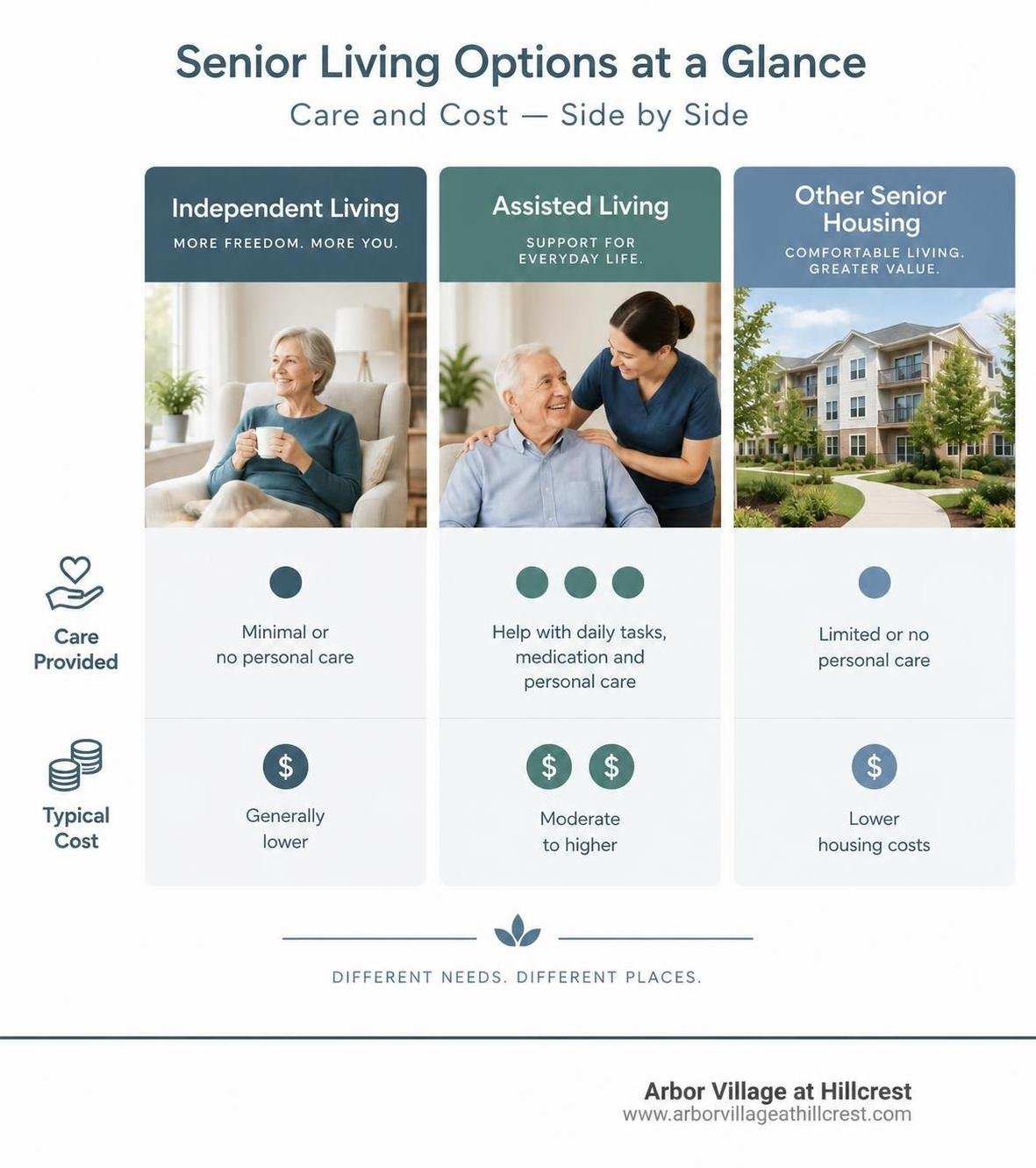
The primary dividing line between independent living and assisted living is the delivery of hands-on, daily personal care.
Independent living is designed for older adults who can manage their health, personal hygiene, and daily routines without staff intervention. These communities focus on hospitality, providing social calendars, restaurant-style meals, housekeeping, and local transportation.
In contrast, assisted living includes all those lifestyle perks while adding structured, professional support tailored to each individual. If you are currently unlocking better care and peace of mind in assisted living, you know that having trained staff on-site day and night changes everything for a family’s stress levels.
Feature Independent Living Assisted Living Primary Focus Lifestyle, convenience, and social connection Hospitality combined with daily personal care Personal Care (ADLs) Not provided by community staff Full assistance with bathing, dressing, hygiene Medication Management Self-managed Administered or supervised by staff Staffing Hospitality and administrative staff 24-hour on-site caregiving and nursing staff Meal Plans Optional or bundled daily meals Three daily chef-prepared meals included Apartment Style Full kitchens, private residences Private apartments with accessible kitchenettes Standalone Assisted Living Communities
Standalone assisted living communities focus their entire operation, staffing model, and architectural design on supporting residents who need daily personal care. Unlike large, multi-tiered campuses where assisted living might be tucked away in a distant wing, a dedicated community ensures that all staff members, activity coordinators, and wellness programs are aligned around supportive care.
In our community setting, this specialized focus allows us to provide intimate, attentive care where team members know each resident’s unique preferences, favorite morning routines, and specific wellness goals.
Types of Housing Models, Subsidies, and Eligibility Requirements
When searching for senior housing, you will encounter distinct financial models ranging from private-pay communities to government-subsidized programs. Understanding how these housing models operate ensures you find a setting that matches your financial plan.
According to state resources like the Division of Aging Services | Housing Options for Senior Citizens, senior housing encompasses a wide variety of regulatory structures, from congregate apartment housing to comprehensive personal care residences.
Market-Rate Assisted Living and Financial Assistance
Most modern assisted living communities operate on a market-rate rental model. Under this structure, residents pay a predictable monthly fee covering their apartment lease, building utilities, dining plans, community amenities, and basic care services.
When comparing affordability, ask each community which services are included in its monthly fee and whether public-benefit programs may help with eligible care costs.
Typical Eligibility Criteria for Adult Assisted Living Apartments
To ensure a community can safely meet an individual’s needs, residents complete an intake evaluation before moving in. Standard eligibility requirements include:
- Age Requirements: Most communities require residents to be at least 55 or 62 years of age.
- Functional Assessment: A wellness director or registered nurse evaluates the resident’s ability to handle ADLs to determine the right care tier.
- Medical Stability: Assisted living is designed for individuals whose medical conditions are predictable and manageable without hospital-level treatment.
- Cognitive Screening: Basic assessments verify whether standard assisted living or a setting with a higher level of support is the safer environment.
Floor Plans, Amenities, and Daily Services in Assisted Living
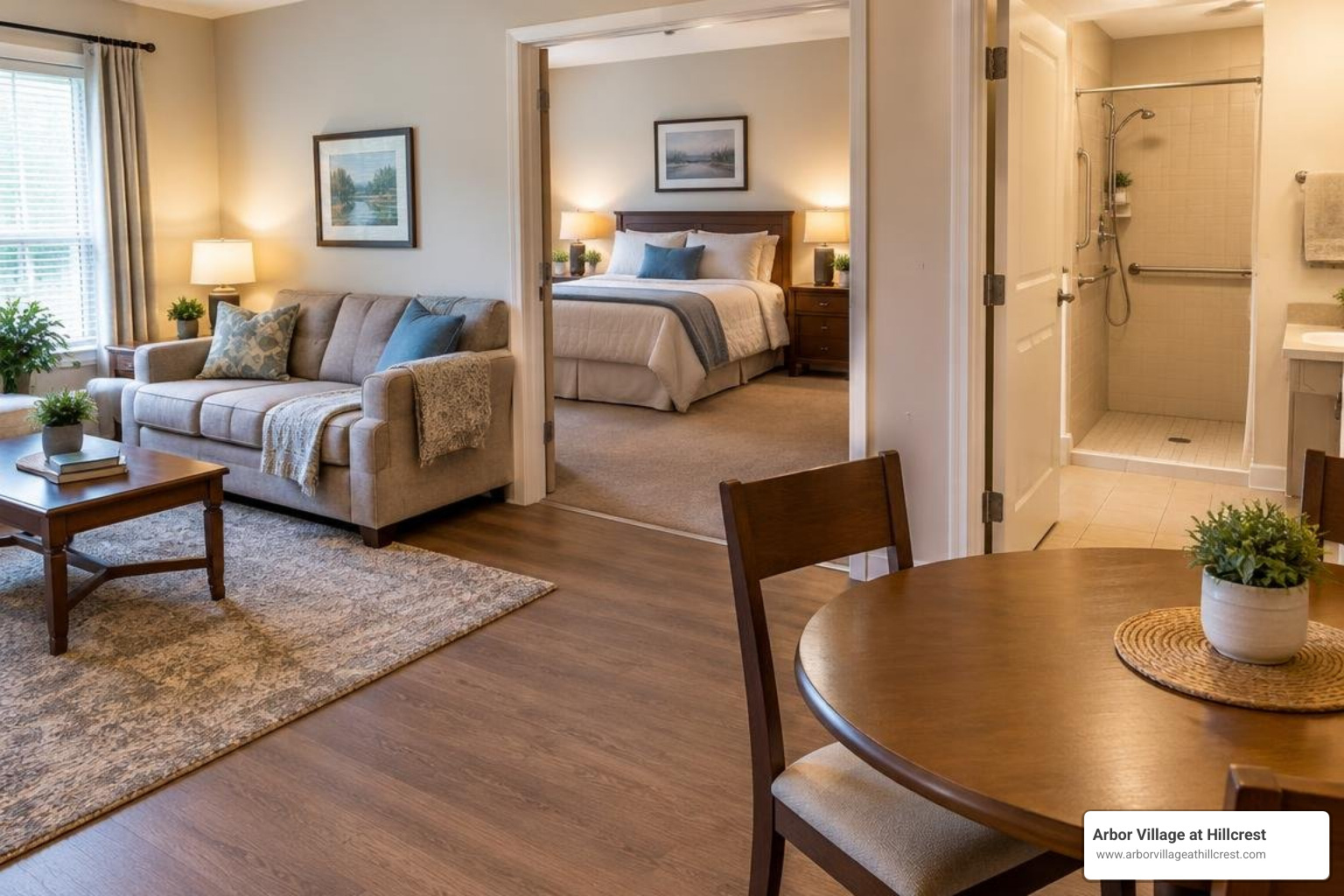
Moving into assisted living should feel like stepping into a private, comfortable home—not a clinical hospital room. Modern apartments are designed for accessibility, safety, and personal warmth.
Common Apartment Sizes and Layouts
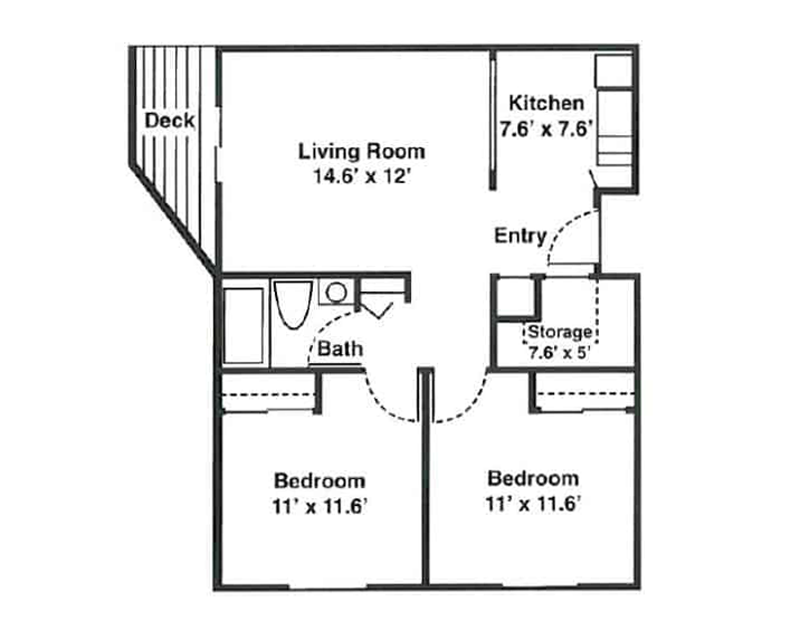
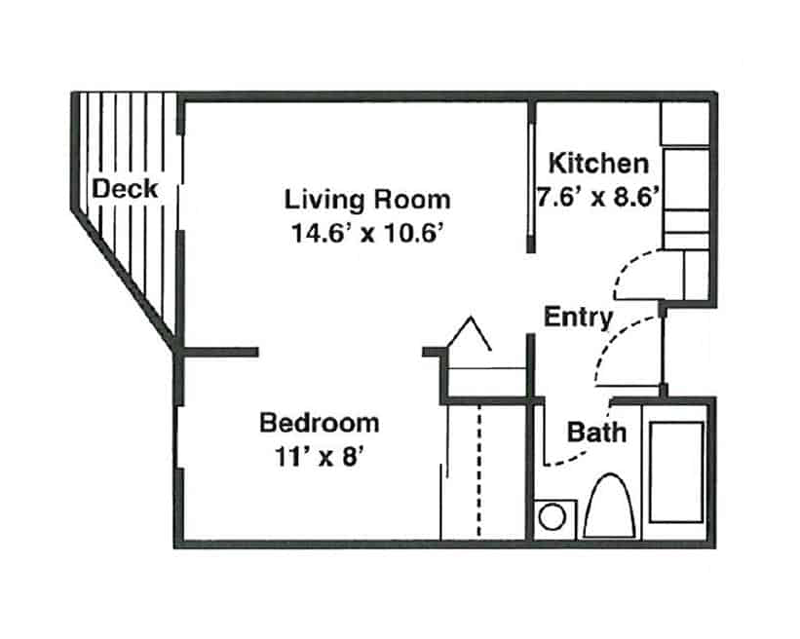
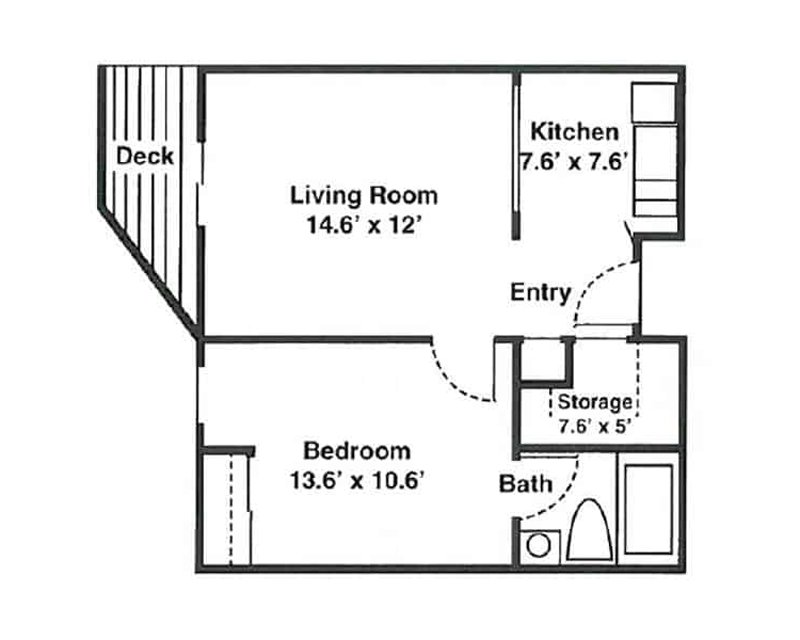
Floor plans in assisted living typically range from efficient studios to spacious one- and two-bedroom layouts:
- Studio Apartments (approx. 300 to 450 sq. ft.): These open-concept suites provide an easy-to-navigate layout where the sleeping, living, and dining spaces are seamlessly connected, minimizing fall risks.
- One-Bedroom Apartments (approx. 500 to 650 sq. ft.): A popular choice that separates the living room from the private bedroom, providing ample space for personal furniture and visiting family.
- Two-Bedroom Apartments (approx. 700+ sq. ft.): Excellent for couples with differing care requirements or individuals who want a dedicated hobby room or study.
Each layout typically features a private, zero-threshold bathroom with grab bars, emergency pull cords, and an accessible kitchenette. Knowing what fits best makes everything you need to pack before moving into assisted living far easier to manage.
What Is Included in Monthly Care and Community Amenities
One of the greatest benefits of assisted living is having a single, all-inclusive monthly structure that handles household management:
- 24-Hour Attentive Support: Dedicated staff available around the clock for planned assistance or unexpected needs.
- Restaurant-Style Dining: Three chef-prepared, nutritionally balanced meals served daily in a social dining room setting.
- Housekeeping & Laundry: Weekly deep cleaning, trash removal, and fresh linens.
- Scheduled Transportation: Escorted rides to local medical visits, grocery stores, and community outings.
- Social Engagement: A full calendar of fun group activities for assisted living that residents will actually love, as well as vibrant assisted living weekend activities to keep the fun going all week long.
Pet Policies in Assisted Living Apartments for Adults
We know that a dog or cat isn’t just an animal—they are family. Fortunately, many quality assisted living communities maintain pet-friendly policies.
When reviewing communities, check their specific guidelines:
- Weight and Breed Limits: Many properties welcome dogs under 35 or 50 pounds, with standard restrictions on aggressive breeds.
- Care Independence: The resident must be able to manage daily feeding, walking, and grooming, or have a family member assist.
- Deposits: Communities usually require a nominal one-time pet fee or deposit.
Understanding what to expect when moving into assisted living with pets can help you transition smoothly with your four-legged companion.
Costs, Pricing Factors, and Financial Assistance Options
Assisted living pricing varies based on apartment size, geographic location, and the level of personalized care required.
Average Monthly Costs Across Different Regions
Assisted living costs reflect real estate values and local labor markets across the country:
- National Averages: Typical monthly rates generally range between $4,500 and $6,000 depending on the state.
- Regional Examples: Monthly costs can range from around $4,892 in Florida to upwards of $7,360 in metropolitan areas like Los Angeles. In Midwestern markets, rates often average between $4,650 and $5,850.
- Pricing Structures: Most communities charge a base rent for the apartment and hospitality services, plus a tiered care fee based on the resident’s specific ADL requirements.
For a deeper look into budgeting strategies, review the complete guide to assisted living benefits and costs.
Paying for Care: Medicaid Waivers, Veterans Benefits, and Subsidies
Families rarely pay for assisted living from a single checking account; they combine private assets and earned benefits:
- VA Aid and Attendance: A tax-free pension benefit available to qualifying wartime veterans and surviving spouses that provides significant monthly funds to help offset personal care costs.
- Long-Term Care Insurance: Private policies that pay out daily or monthly benefits once a policyholder requires assistance with two or more ADLs.
- Medicaid HCBS Waivers: For seniors who meet state financial asset and income limits, Medicaid waivers can help cover care services within participating communities.
How to Tour and Evaluate Communities for Your Loved One
Stepping inside a community in person is the most reliable way to gauge its atmosphere, staff warmth, and overall cleanliness.
Before you begin visits, bring along the ultimate assisted living checklist for evaluating options to keep your observations organized.
Essential Questions to Ask on Your Visit
During your tour, speak with both administrators and front-line caregivers. Be sure to explore key questions to ask with your checklist for assisted living facilities, such as:
- What is your direct caregiver-to-resident ratio during the day and overnight?
- How are care plans updated when a resident’s health needs change?
- What are the exact protocols for medication administration and pharmacy deliveries?
- Are your leases structured as long-term commitments or flexible agreements?
Key Quality and Safety Indicators to Inspect
Look beyond the fresh paint and floral arrangements. Pay attention to subtle quality markers:
- Staff Interactions: Do staff members greet residents by name with genuine smiles?
- Dining Experience: Stay for lunch. Is the food flavorful, fresh, and served warm?
- Building Safety: Are hallways free of clutter, well-lit, and equipped with continuous handrails and emergency pull stations?
- Lease Flexibility: Look for communities that offer flexible senior living and month-to-month assisted living options, giving your family freedom without restrictive multi-year contracts.
Frequently Asked Questions About Senior Housing
What is the typical minimum age requirement for senior apartments?
Most age-restricted senior communities set an entry age of 55 or 62 years old, aligning with federal housing guidelines. Assisted living communities commonly accommodate adults aged 62 and older, though younger adults with qualifying functional disabilities or chronic physical conditions may also be admitted based on state licensing rules.
How much help with activities of daily living is provided in assisted living?
Assisted living provides customized, hands-on support for core daily activities. This includes physical help with bathing, showering, choosing clothing, dressing, grooming, using the restroom, mobility transfers, and comprehensive medication management. Care plans are tailored so you only receive and pay for the assistance you actually need.
Can couples with different care needs share an apartment?
Yes. One of the greatest advantages of assisted living is that couples can continue living together even if one spouse is fully independent while the other requires advanced daily care. The community bills a base apartment rate (often with a second-occupant fee) and applies individual care packages specifically to the person who needs them.
Conclusion
Finding the right supportive living environment is about balancing safety, dignity, and personal lifestyle. When your parent has the right daily support in place, family relationships can return to being loving connections rather than stressful caregiving routines.
At Arbor Village at Hillcrest, we provide compassionate independent living, assisted living, and respite care in our beautifully renovated Boise, Idaho community. Our pet-friendly campus, vibrant daily activities, comfortable amenities, and attentive team create an environment where residents thrive with confidence.
Take the next step in your search—reach out today to explore quality assisted living apartments and schedule a personalized tour with our friendly team.




Ready to take the next step?
Schedule a Tour